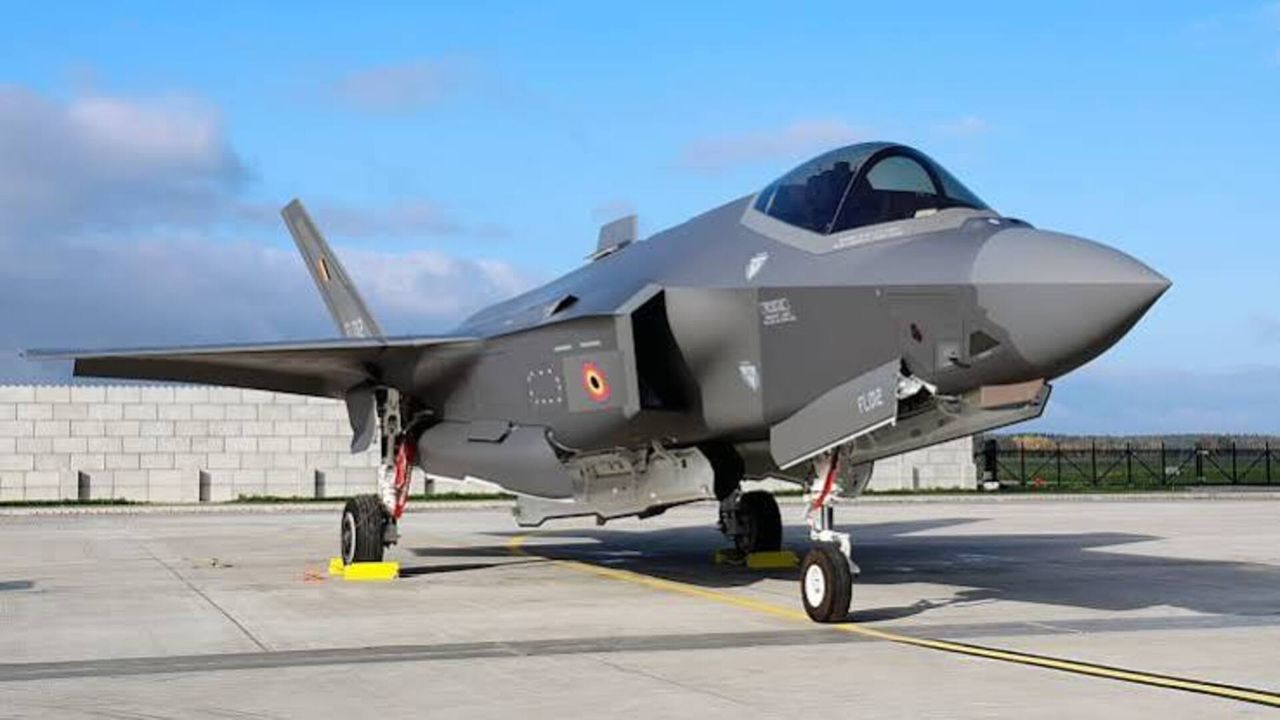
China says new AI missile system can track US F-35s with 90% accuracy
Chinese researchers built an AI targeting infrared traces from F-22 and F-35 engines Flare decoys reportedly fail to fool this heat-based recognition model Lab tests show recognition accuracy above 90 percent for simulated targets Chinese researchers have claimed a lightweight AI system can identify
<![CDATA[ <article> <ul><li><strong>Chinese researchers built an AI targeting infrared traces from F-22 and F-35 engines</strong></li><li><strong>Flare decoys reportedly fail to fool this heat-based recognition model</strong></li><li><strong>Lab tests show recognition accuracy above 90 percent for simulated targets</strong></li></ul><p>Chinese researchers have claimed a lightweight AI system can identify heat signatures resembling those of F-22 and F-35 stealth fighters.</p><p>The F-22 and F-35 are designed to make enemy detection and tracking more difficult, particularly by reducing their visibility to radar and other sensors.</p><p>That makes any technology capable of recognizing their remaining infrared signatures potentially important for detecting aircraft built around stealth.</p><h2 id="ai-recognition-focuses-on-aircraft-heat">AI recognition focuses on aircraft heat</h2><p>Unlike radar-based detection, infrared systems look for heat produced by an aircraft's engines, exhaust, and heated surfaces during flight.</p><p>The researchers claim that AI can analyze those patterns and distinguish simulated F-22 and F-35 signatures from other airborne objects.</p><p>Pilots often use flares to confuse conventional heat-seeking sensors during an engagement.</p><p>However, the researchers say that aircraft-generated heat differs from flare emissions, giving an AI system another basis for separating an aircraft from decoys.</p><p>The researchers tested their recognition model using simulated targets representing the thermal characteristics associated with F-22 and F-35 aircraft.</p><p>According to the study's lead author, the approach is intended to combine rapid processing with sufficient recognition capability for missile applications.</p><p>“Lightweight recognition models could become widely used in future air-to-air missiles because they can provide high-speed recognition while maintaining strong identification capabilities,” said An Jiangshan, first author of the study.</p><p>Laboratory testing reportedly produced recognition accuracy exceeding 90%, although operational performance against real aircraft remains unverified.</p><p>That distinction matters because real aircraft generate changing thermal patterns under different speeds, altitudes, maneuvering conditions, and environmental circumstances.</p><p>The researchers also describe the system as lightweight, suggesting that its computing requirements could be suitable for missile-mounted hardware with limited space and processing capacity.</p><h2 id="limits-remain-around-real-world-performance">Limits remain around real-world performance</h2><p>Stealth aircraft are designed primarily to reduce radar visibility, but infrared emissions remain an important consideration for infrared-guided weapons.</p><p>Heat-seeking missiles already use infrared sensors, while machine-learning systems could potentially assist those sensors with identifying complex thermal patterns.</p><p>However, the reported research does not establish that the system can reliably track operational F-22 or F-35 aircraft under combat conditions.</p><p>Actual engagements would introduce atmospheric conditions, changing viewing angles, aircraft maneuvers, background temperatures, and electronic countermeasures that laboratory testing may not fully reproduce.</p><p>Even without proving the system can defeat operational aircraft, the research points toward a growing challenge for American stealth platforms.</p><p>The United States cannot assume that reducing radar visibility will remain sufficient as AI systems become better at recognizing infrared patterns.</p><p>Future F-22 and F-35 upgrades could therefore require greater attention to heat management, exhaust signatures and other infrared characteristics.</p><p>The same concern applies to future stealth bombers, which could face increasingly capable AI-assisted infrared sensors.</p><p>Stealth designs may need to consider how machine-learning systems interpret heat patterns rather than simply minimizing the strength of those emissions.</p><p>That could become increasingly important as lightweight AI <a href="https://www.techradar.com/news/best-processors">processors</a> become easier to integrate into missiles and other airborne weapons.</p><p>American defence planners have little reason to wait until such systems demonstrate their capabilities during actual combat. </p><p>Via <a href="https://www.scmp.com/news/china/science/article/3363843/chinese-missile-ai-tracks-f-22-f-35-heat-signatures-over-90-accuracy" target="_blank" rel="nofollow">SCMP</a></p><figure class="van-image-figure inline-layout" data-bordeaux-image-check ><div class='image-full-width-wrapper'><div class='image-widthsetter' style="max-width:676px;"><p class="vanilla-image-block" style="padding-top:31.51%;"><img id="diM9tpwF2Lz85R8q85CT78" name="tr-g_news" alt="Google logo on a black background next to text reading 'Click to follow TechRadar'" src="https://cdn.mos.cms.futurecdn.net/diM9tpwF2Lz85R8q85CT78.jpg" mos="" align="middle" fullscreen="" width="676" height="213" attribution="" endorsement="" class="inline"></p></div></div></figure> </article> ]]>
Read the full article on TechRadar
Read Full Article →