Forget big donors — Tor Project proved a crowd of small givers can bankroll internet freedom and raise over $200K
The Tor Project's debut participatory funding raised more than $200,000 A "quadratic funding" model meant the number of backers mattered more than the size of any single donation The experiment was a response to a 2025 collapse in traditional funding Back in May, we covered the launch of an unusual
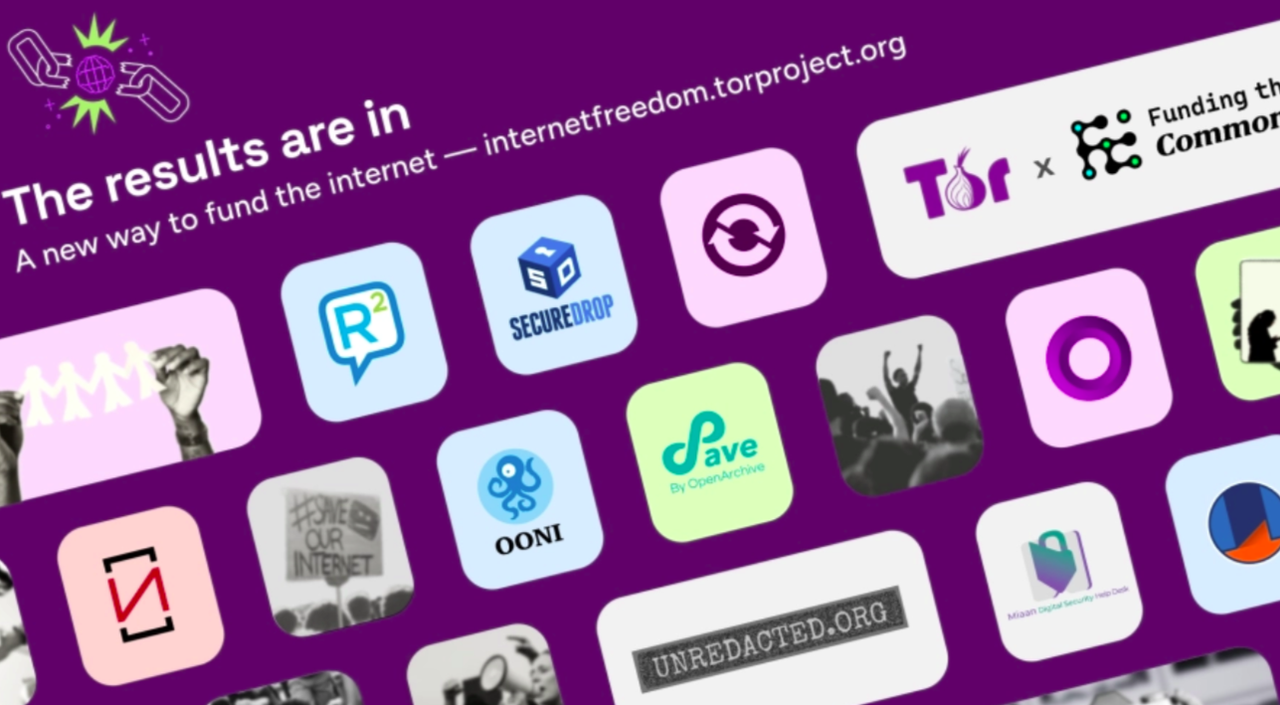
<![CDATA[ <article> <ul><li><strong>The Tor Project's debut participatory funding raised more than $200,000</strong></li><li><strong>A "quadratic funding" model meant the number of backers mattered more than the size of any single donation</strong></li><li><strong>The experiment was a response to a 2025 collapse in traditional funding </strong></li></ul><p>Back in May, we <a href="https://www.techradar.com/vpn/vpn-privacy-security/worried-about-the-future-of-the-internet-tor-launches-crypto-powered-fundraising-initiative-to-secure-internet-freedoms-and-your-vote-matters-more-than-your-wallet-size">covered the launch</a> of an unusual fundraising experiment from the nonprofit behind the <a href="https://www.techradar.com/reviews/tor-browser">Tor Browser</a>. The results are now in, and they give the team reason to be cautiously optimistic.</p><p><a href="https://blog.torproject.org/funding-internet-freedom-together/" target="_blank" rel="nofollow">More than $200,000</a> was raised in total, with $174,536 distributed to participating grantee projects. The campaign officially closed on June 19th, and the Tor Project has spent the weeks since reconciling a tangle of multi-currency, privacy-preserving donations before sharing the final numbers.</p><p>While most people rely on one of the <a href="https://www.techradar.com/vpn/best-vpn">best VPN</a> services to keep their everyday browsing private, activists, whistleblowers, and journalists in heavily censored regions lean on a more specialized set of open-source tools. Those tools are exactly what this campaign set out to sustain.</p><a href="https://x.wayin.com/display/container/dc/efe848be-588a-4e20-8711-6e02de64b315/details"><figure class="van-image-figure inline-layout" data-bordeaux-image-check ><div class='image-full-width-wrapper'><div class='image-widthsetter' style="max-width:1200px;"><p class="vanilla-image-block" style="padding-top:26.17%;"><img id="Z7QHFc4GHoMhdps5XmntoC" name="LNT-masthead" alt="Leave No Trace logo" src="https://cdn.mos.cms.futurecdn.net/Z7QHFc4GHoMhdps5XmntoC.png" mos="" align="middle" fullscreen="" width="1200" height="314" attribution="" endorsement="" class="inline"></p></div></div><figcaption itemprop="caption description" class=" inline-layout"><span class="credit" itemprop="copyrightHolder">(Image credit: Future)</span></figcaption></figure></a><p><strong>NEW</strong>: <a href="https://x.wayin.com/display/container/dc/efe848be-588a-4e20-8711-6e02de64b315/details" target="_blank" rel="nofollow"><strong>Leave No Trace</strong></a> — A weekly newsletter on digital privacy and online surveillance.</p><p>Leave No Trace investigates the companies and governments putting our digital freedom at risk — and the people fighting back.</p><p>📩 <a href="https://x.wayin.com/display/container/dc/efe848be-588a-4e20-8711-6e02de64b315/details">Subscribe now</a> to get every edition delivered to your inbox every Friday, launching this September.</p><h2 id="small-donations-big-impact">Small donations, big impact</h2><p>The headline figure hides a more interesting story: 580 unique donors made 662 contributions, with an average donation size of just $41. </p><p>Direct community donations came to roughly $27,000, which was then added to an existing matching pool with funds provided by the following organizations: Cake Wallet, the Ethereum Foundation, Logos, Octant, Xeovo, and Zcash Community Grants.</p><p>The campaign used <a href="https://gitcoin.co/mechanisms/quadratic-funding" target="_blank" rel="nofollow">quadratic funding</a>, a model that rewards the breadth of support rather than the depth of any single wallet. While the organizations donated the biggest portion of the cash, it was the community donations that decided where that cash went.</p><div class="see-more see-more--clipped"><figure><blockquote class="twitter-tweet hawk-ignore" data-lang="en" cite="https://twitter.com/cantworkitout/status/2089413888010006749"><p lang="en" dir="ltr">The results are in: Our first crowdfunding round in partnership with @FundingCommons has raised more than $200k for projects working across privacy, censorship circumvention, secure communications, and public-interest digital infrastructure. https://t.co/Cy113fJHUy @web3privacy…<a href="https://twitter.com/cantworkitout/status/2089413888010006749">August 17, 2026</a></p></blockquote></figure><div class="see-more__filter"></div></div><p>The timing was not accidental. US funding for global internet freedom was <a href="https://www.theguardian.com/world/2026/feb/19/us-funding-for-global-internet-freedom-effectively-gutted" target="_blank" rel="nofollow">"effectively gutted"</a> in 2025, with many programs cut permanently and the main granting office issuing no money that year. </p><p>Even the Open Technology Fund, a long-standing backer of tools like Tor and Signal, had its congressionally authorized grant terminated and <a href="https://www.theregister.com/2025/03/25/otf_tor_lets_encrypt_funding_lawsuit/" target="_blank" rel="nofollow">went to court</a> to try to save it.</p><p>The Tor Project frames this as a structural problem, not a one-off. When public-interest infrastructure leans too heavily on a single funder, one decision can put essential work at risk. </p><p>That fragility is sharpened by a worsening censorship climate: <a href="https://www.techradar.com/vpn/vpn-privacy-security/2025-was-the-worst-year-on-record-for-internet-shutdowns-as-censors-move-to-more-targeted-blocks">2025 was the worst year on record for internet shutdowns</a>, with censors also <a href="https://www.techradar.com/vpn/vpn-privacy-security/internet-censorship-hit-half-the-worlds-population-in-2025-surfshark-warns-and-2026-is-already-looking-grim">shifting toward more targeted blocks</a> on apps and platforms.</p><h2 id="where-the-money-went">Where the money went</h2><p>Ten projects shared the pot, spanning censorship circumvention, secure messaging, and secure journalism. </p><p><strong>Onion Browser</strong>, which brings Tor access to iOS, took the largest allocation at around $111,000, followed by <strong>Unredacted</strong> — the non-profit behind the <a href="https://www.techradar.com/vpn/vpn-privacy-security/its-time-to-punch-more-holes-in-the-closed-internet-this-free-vpn-now-promises-to-be-even-better-at-evading-censorship">free, censorship-resistant FreeSocks VPN</a> —with roughly $41,000. Familiar names like <strong>SecureDrop</strong>, <strong>OnionShare</strong>, <strong>OONI</strong>, and <strong>Ricochet Refresh</strong> each received a guaranteed minimum.</p><p>The Tor Project is candid that the model is "promising, but operationally complex" (15% of the funds went to running the campaign), and that better-known projects had an advantage. Even so, smaller grantees reported a valuable side effect: new visibility, followers, and first-time discovery. </p><p>The round has now closed, but the team says it is already exploring what future matching pools could look like.</p> </article> ]]>
Read the full article on TechRadar
Read Full Article →