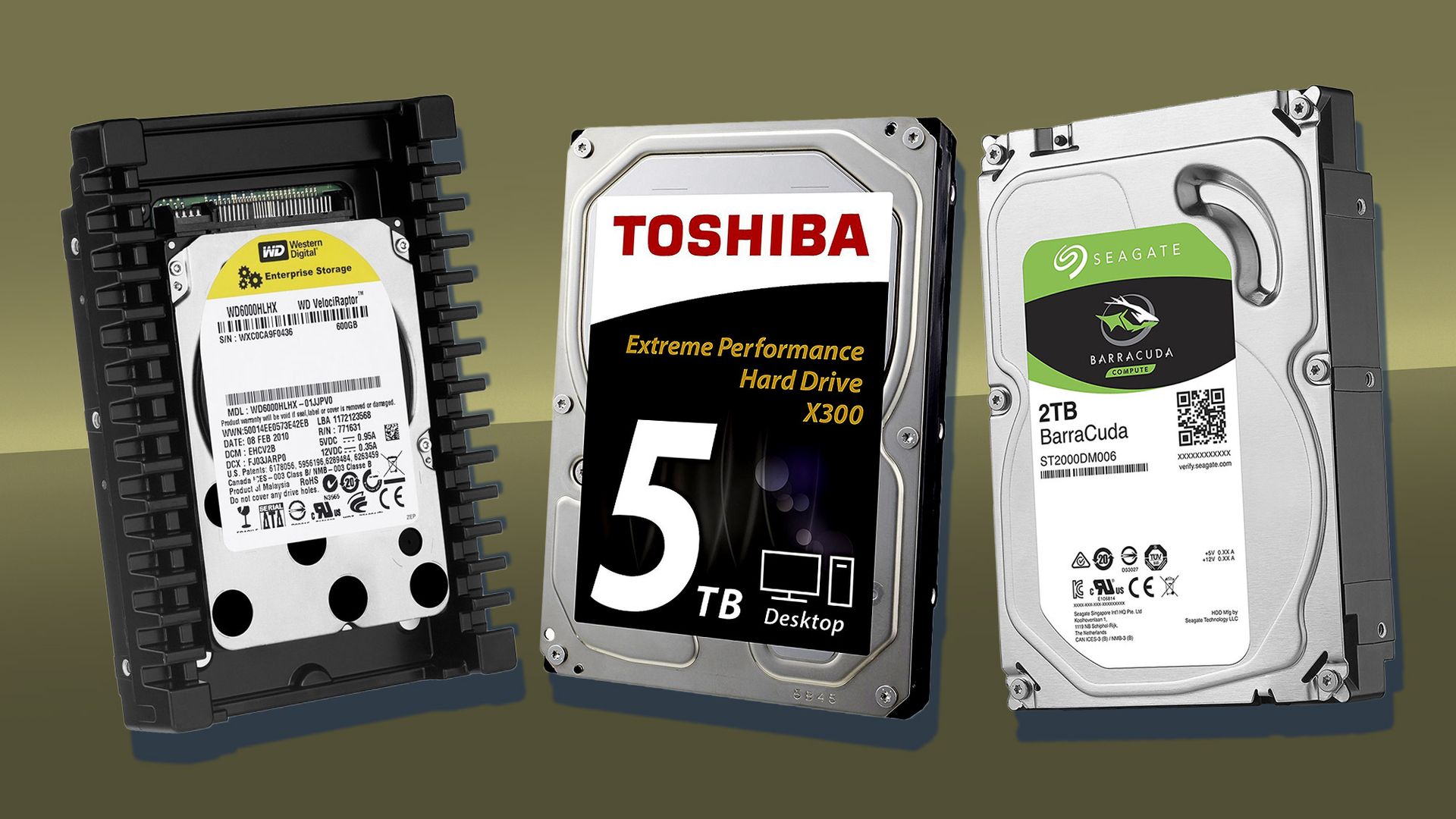
Hard drives were supposed to lose the storage war — but AI demand is now pushing their biggest suppliers years ahead
Toshiba plans to nearly double AI storage HDD capacity by fiscal 2027 Toshiba is spending $380 million to expand Philippine HDD production capacity New Toshiba drives could increase storage capacity by 40% per drive Artificial intelligence is giving conventional hard drives an unexpected second wind
<![CDATA[ <article> <ul><li><strong>Toshiba plans to nearly double AI storage HDD capacity by fiscal 2027</strong></li><li><strong>Toshiba is spending $380 million to expand Philippine HDD production capacity</strong></li><li><strong>New Toshiba drives could increase storage capacity by 40% per drive</strong></li></ul><p>Artificial intelligence is giving conventional hard drives an unexpected second wind, as data centers require enormous amounts of relatively affordable storage.</p><p>Toshiba is responding to this surge by investing 60 billion yen, or about $380 million, to expand its <a href="https://www.techradar.com/news/10-best-internal-desktop-and-laptop-hard-disk-drives-2016">HDD</a> manufacturing in the Philippines.</p><p>The company expects production capacity for AI and cloud storage drives to nearly double by fiscal 2027.</p><h2 id="toshiba-prepares-for-the-storage-squeeze">Toshiba prepares for the storage squeeze</h2><p>The investment would become Toshiba's first major HDD expansion in roughly five years as the company responds to growing demand from AI infrastructure.</p><p>New production lines will be added, while Toshiba will also handle drives capable of storing up to 40% more data than existing products.</p><p>The company is additionally pursuing 65TB-class HDDs around 2030, followed later by models capable of reaching 100TB.</p><p>These higher-capacity products would allow Toshiba to supply more storage without requiring equivalent increases in drive quantities.</p><p>Toshiba currently holds slightly more than 10% of the global HDD market when measured by storage capacity, and the company is expanding because demand is strong.</p><p>Hard drives remain useful to Toshiba's expansion plans because their lower cost allows data centers to store enormous datasets without relying on expensive <a href="https://www.techradar.com/news/best-solid-state-drives-ssds">SSDs</a>.</p><p>Though SSDs provide faster access, their prices run about 20 times higher than HDDs, making disks attractive where capacity matters more than immediate retrieval speed.</p><p>AI systems generate and retain substantial amounts of data, creating demand for storage that does not always require the performance associated with SSDs.</p><p>Rivals such as Seagate and Western Digital also face strong demand for their high-capacity drives from <a href="https://www.techradar.com/pro/best-data-center-proxies">data center</a> customers.</p><p>Seagate has reportedly allocated most of its nearline HDD capacity through 2028, with some customers discussing requirements extending into 2029 and beyond.</p><p>Western Digital has also committed much of its 2027 production, with some capacity for 2028 and 2029 already covered.</p><h2 id="toshiba-scales-production-beyond-capacity">Toshiba scales production beyond capacity</h2><p>Toshiba also plans to automate inspection activities and cleanroom operations at its Philippine facilities as production increases.</p><p>The company expects those changes to reduce additional staffing requirements by around 40% while also improving manufacturing yields.</p><p>Toshiba is not expanding in isolation, because suppliers of specialized HDD components are also increasing their manufacturing capabilities.</p><p>Nitto Denko plans to spend 28 billion yen (about $117 million) expanding CISFLEX production, with capacity expected to rise 40% by fiscal 2028 from fiscal 2025.</p><p>Nitto Denko controls more than 90% of the global market for the component used in HDD magnetic-head suspension assemblies.</p><p>Western Digital is separately planning about $1 billion of investment in Japan through 2030 for research, manufacturing technology, recruitment, and cooperation with universities.</p><p>For Toshiba, the immediate challenge is increasing supply quickly enough to capture AI-driven demand, and its long-term plan is to increase its market share to 30%.</p><p>Via <a href="https://www.trendforce.com/news/2026/10/02/news-toshiba-to-double-ai-data-center-hdd-capacity-by-fy2027-with-380m-expansion-as-ai-storage-demand-surges/" target="_blank" rel="nofollow">TrendForce</a></p><figure class="van-image-figure inline-layout" data-bordeaux-image-check ><div class='image-full-width-wrapper'><div class='image-widthsetter' style="max-width:676px;"><p class="vanilla-image-block" style="padding-top:31.51%;"><img id="diM9tpwF2Lz85R8q85CT78" name="tr-g_news" alt="Google logo on a black background next to text reading 'Click to follow TechRadar'" src="https://cdn.mos.cms.futurecdn.net/diM9tpwF2Lz85R8q85CT78-1920-80.jpg" mos="" align="middle" fullscreen="" width="676" height="213" attribution="" endorsement="" class="inline"></p></div></div></figure> </article> ]]>
Read the full article on TechRadar
Read Full Article →