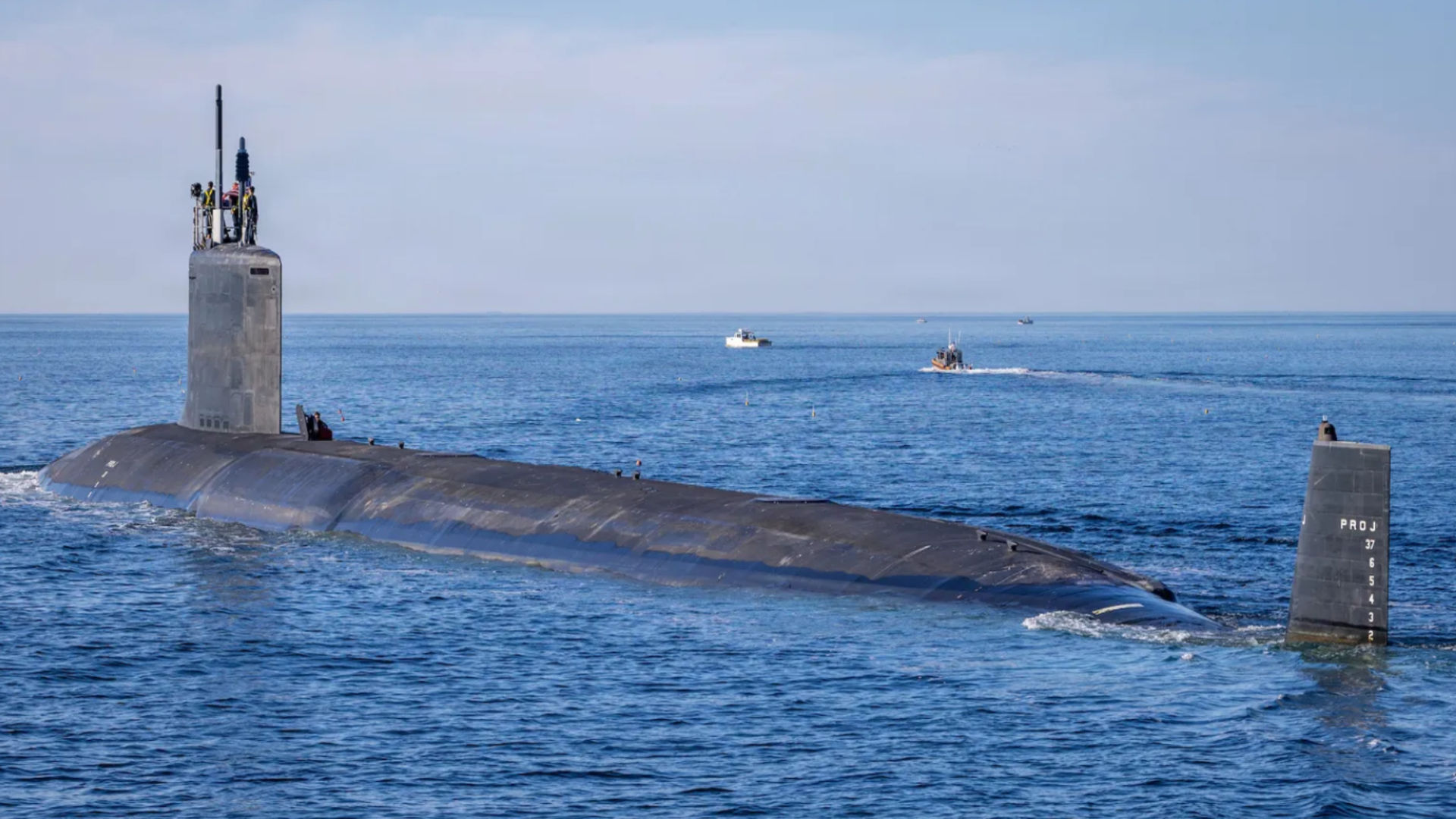
Saab unveils its monster underwater drone vehicle, created and built in less than a year
Saab develops a working underwater drone demonstrator in less than a year Sweden's new underwater vehicle has completed its initial sea trials Military authorities will evaluate the drone before deciding on procurement use Saab has built a large uncrewed underwater vehicle demonstrator, known as LUU
<![CDATA[ <article> <ul><li><strong>Saab develops a working underwater drone demonstrator in less than a year</strong></li><li><strong>Sweden's new underwater vehicle has completed its initial sea trials</strong></li><li><strong>Military authorities will evaluate the drone before deciding on procurement use</strong></li></ul><p>Saab has built a large uncrewed underwater vehicle demonstrator, known as LUUV, in collaboration with Swedish defense authorities.</p><p>The company finished development in less than a year after receiving its contract, and the prototype has already passed its first sea trials successfully.</p><p>This means the <a href="https://www.techradar.com/cameras/drones/best-drone">drone</a> now counts as a working demonstrator, giving engineers a real platform they can test and improve in the water.</p><h2 id="quick-progress-and-real-world-testing">Quick progress and real-world testing</h2><p>The Swedish Defence Materiel Administration (FMV) and the Swedish Armed Forces are also involved, and they will help judge whether the technology suits military needs.</p><p>Saab says the fast progress came from officials and engineers working side by side to develop and test the equipment in a short period.</p><p>“This project demonstrates how new technologies can be rapidly translated into practical operational value,” said Mats Wicksell, head of Saab’s business area Naval.</p><p>“The fact that we have also been able to develop and test the system in such a short timeframe demonstrates the strength of the collaboration between the Swedish Armed Forces, FMV and Saab.”</p><p>Saab argues this kind of partnership can shorten the time between spotting a military requirement and testing a practical solution at sea.</p><p>The completed sea trials offer a first look at how the vehicle performs in actual ocean conditions, rather than only during development testing.</p><p>A demonstrator is an early working model built to prove that an idea functions, rather than a finished product ready for regular service.</p><p>However, this milestone applies only to a demonstrator, so further development is still needed before the system can be considered ready for operational use.</p><p>Going forward, Saab expects the next phase to bring more autonomous functions, software improvements and additional sensors.</p><h2 id="software-benefits-and-open-questions">Software, benefits, and open questions</h2><p>The project relies on Saab's Autonomous Ocean Core, a proprietary software platform designed to let underwater and surface vessels operate autonomously without constant human control.</p><p>This software-focused approach lets developers build automated functions into marine platforms and adjust them later as operational requirements change over time.</p><p>Saab believes uncrewed underwater vehicles could extend mission endurance, improve awareness of activity beneath the surface and strengthen a navy's overall capabilities under the sea.</p><p>Such platforms could prove useful for maritime surveillance and other underwater missions, although Saab has not shared the full specifications of this particular demonstrator.</p><p>The company has not announced the vehicle's size, maximum depth, endurance, speed or payload capacity, so many important details remain unknown for now.</p><p>The next development phase will therefore be important, because it should show which capabilities the platform can actually deliver to the armed forces.</p><p>Swedish authorities will, however, use these results to decide whether the technology deserves more investment.</p><p>Whatever happens next, Saab has shown that close collaboration between industry and government can deliver a working underwater vehicle in a remarkably short time.</p><p>Via <a href="https://dronefront.com/saab-large-underwater-drone/" target="_blank" rel="nofollow">Drone Front</a></p><figure class="van-image-figure inline-layout" data-bordeaux-image-check="" ><div class='image-full-width-wrapper'><div class='image-widthsetter' style="max-width:676px;"><p class="vanilla-image-block" style="padding-top:31.51%;"><img id="diM9tpwF2Lz85R8q85CT78" name="tr-g_news" alt="Google logo on a black background next to text reading 'Click to follow TechRadar'" src="https://cdn.mos.cms.futurecdn.net/diM9tpwF2Lz85R8q85CT78-1920-80.jpg" mos="" align="middle" fullscreen="" width="676" height="213" attribution="" endorsement="" class="inline" /></p></div></div></figure> </article> ]]>
Read the full article on TechRadar
Read Full Article →