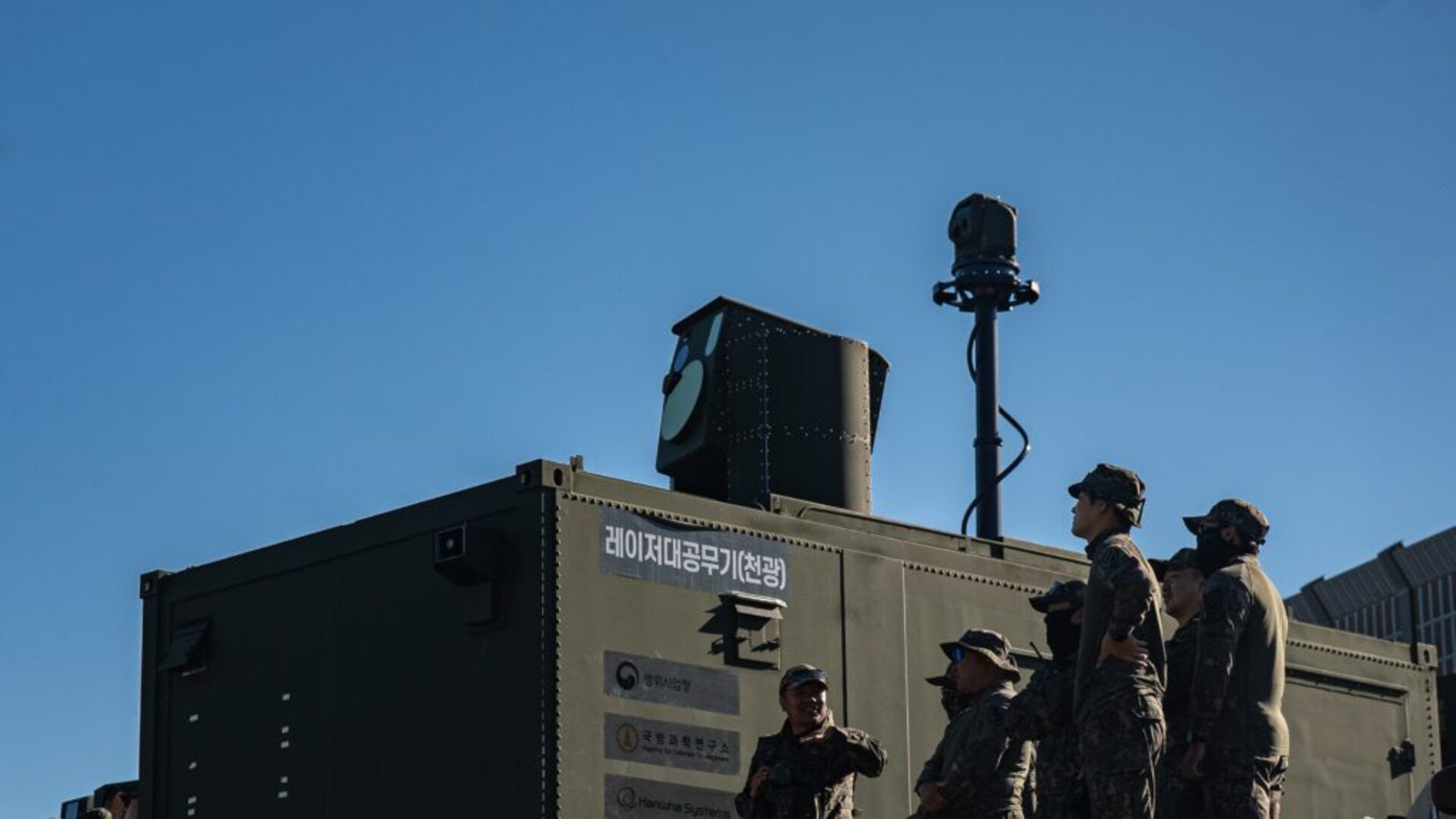
South Korea unveils world's first fielded laser air defense weapon — Hanwha's Cheongwang downs drones in 1 second for just $1.50 a shot
South Korea deploys Cheongwang, a laser weapon designed to destroy hostile drones Hanwha estimates each Cheongwang engagement costs approximately $1.50 Laser weapons could reduce dependence on expensive interceptor missiles against drones South Korea has deployed Cheongwang, a laser-based air defenc
<![CDATA[ <article> <ul><li><strong>South Korea deploys Cheongwang, a laser weapon designed to destroy hostile drones</strong></li><li><strong>Hanwha estimates each Cheongwang engagement costs approximately $1.50</strong></li><li><strong>Laser weapons could reduce dependence on expensive interceptor missiles against drones</strong></li></ul><p>South Korea has deployed Cheongwang, a laser-based air defence system designed to destroy hostile drones without using conventional ammunition.</p><p>Developed by Hanwha Systems alongside the Agency for Defense Development, the weapon has entered operational service.</p><p>Its manufacturer estimates each engagement costs approximately $1.50, potentially reducing the financial burden of defending against inexpensive aerial threats.</p><h2 id="cheongwang-demonstrates-low-cost-drone-interception">Cheongwang demonstrates low-cost drone interception</h2><p>The Republic of Korea Army tested Cheongwang during its TIGER+ Future Warfare Integrated Combat Exercise on October 14, 2026.</p><p>Hanwha Systems reported that the 30-kilowatt-class weapon destroyed all three <a href="https://www.techradar.com/cameras/drones/best-drone">drones </a>launched during the exercise, which attracted about 500 military personnel and other observers.</p><p>Cheongwang operates by directing concentrated laser energy onto an aerial object until the resulting heat damages its structure or critical components.</p><p>Unlike conventional interceptors, the system does not require a separate missile for every engagement, provided sufficient electrical power and cooling remain available.</p><p>The manufacturer estimates that firing costs approximately $1.50 per engagement, substantially below the price of many missiles used against attack drones.</p><p>That figure does not necessarily represent the complete operating cost, since maintenance, electricity, equipment depreciation and other expenses may also affect deployment economics.</p><p>The conflicts between Russia and Ukraine as well as that between the U.S. / Israel and Iran have revealed how expensive drone interception can be. The laser technology seeks to offer a cheaper option.</p><p>“Laser weapons are core assets that will fundamentally change the game of air defense,” said Joohun Shin, head of Hanwha Systems' Laser Systems Business Centre</p><p>“Driven by unmatched technological capability and proven operational performance, we will accelerate our entry into the global market...”</p><h2 id="hanwha-pursues-more-powerful-mobile-laser-systems">Hanwha pursues more powerful mobile laser systems</h2><p>Hanwha also demonstrated a 50-kilowatt Laser Armored Vehicle during the Defense Drone Technology Exhibition on September 16, 2026.</p><p>The company reported that Cheongwang neutralised four drones and two uncrewed aircraft consecutively during that separate demonstration.</p><p>The more powerful vehicle is being developed for greater mobility and potential international sales, with Hanwha displaying it at MSPO in Kielce, Poland.</p><p>Its development indicates that South Korea's defence industry is pursuing laser systems with different power levels and deployment requirements.</p><p>The United Kingdom is also advancing similar technology through DragonFire, a directed energy weapon developed by MBDA, Leonardo and QinetiQ alongside the Defence Science and Technology Laboratory.</p><p>The system struck aerial targets during trials in Scotland's Hebrides in 2024, and British authorities are advancing plans for installation aboard a Royal Navy Type 45 destroyer.</p><p>Laser weapons could offer sustained protection against repeated drone attacks, although their effectiveness depends on available power, tracking accuracy, engagement time and atmospheric conditions.</p><p>A laser can engage only a limited number of targets simultaneously, making attack volume an important consideration for operational planners.</p><p>South Korea's deployment allows Hanwha to pursue global customers seeking less expensive counter-drone options.</p><p>However, wider adoption will depend on independently verifiable performance and operational reliability and evidence of effectiveness. </p><p>Via <a href="https://ukdefencejournal.org.uk/worlds-first-fielded-laser-downs-drones-in-korea-test/" target="_blank" rel="nofollow">UKDJ</a></p><figure class="van-image-figure inline-layout" data-bordeaux-image-check ><div class='image-full-width-wrapper'><div class='image-widthsetter' style="max-width:676px;"><p class="vanilla-image-block" style="padding-top:31.51%;"><img id="diM9tpwF2Lz85R8q85CT78" name="tr-g_news" alt="Google logo on a black background next to text reading 'Click to follow TechRadar'" src="https://cdn.mos.cms.futurecdn.net/diM9tpwF2Lz85R8q85CT78-1920-80.jpg" mos="" align="middle" fullscreen="" width="676" height="213" attribution="" endorsement="" class="inline"></p></div></div></figure> </article> ]]>
Read the full article on TechRadar
Read Full Article →