The US government wants to make it easier to build and launch floating nuclear reactors, 'unleashing American energy dominance'
Washington wants new rules for civilian nuclear reactors operating at sea IAEA will launch ATLAS as America pushes nuclear power offshore Small modular reactors could power ships without frequent nuclear refueling The United States government is backing an international effort to clear regulatory ba
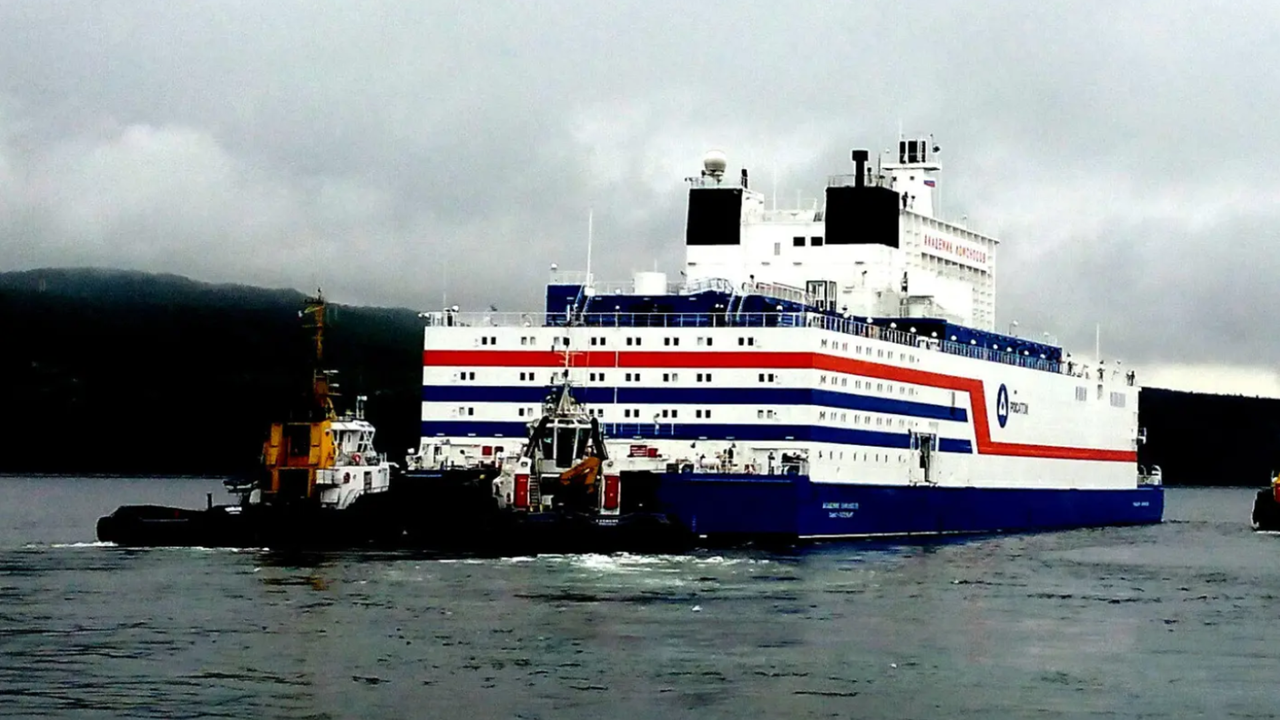
<![CDATA[ <article> <ul><li><strong>Washington wants new rules for civilian nuclear reactors operating at sea</strong></li><li><strong>IAEA will launch ATLAS as America pushes nuclear power offshore</strong></li><li><strong>Small modular reactors could power ships without frequent nuclear refueling</strong></li></ul><p>The United States government is backing an international effort to clear regulatory barriers around civilian nuclear reactors operating on ships and floating platforms.</p><p>The initiative could eventually enable floating power plants serving coastal communities and industries requiring substantial electricity or desalination capacity.</p><p>The International Atomic Energy Agency (IAEA) will launch its Atomic Technologies Licensed for Applications at Sea (ATLAS) initiative in Washington on August 26 and 27, aiming to clear the path for reactors at sea.</p><h2 id="us-pushes-for-nuclear-power-at-sea">US pushes for nuclear power at sea</h2><p>"The global maritime sector is at a critical turning point, facing urgent pressure to sustain long-distance, high-speed operations while ensuring reliability and energy security," said Rafael Mariano Grossi, Director General of the IAEA.</p><p>"Small modular reactors offer a safe and viable option for maritime transport and offshore energy systems, delivering high energy density and long operating cycles that eliminate the need for frequent refueling."</p><p>Ahead of the official ATLAS launch, the United States will hold an Industry Day event on August 25 to showcase relevant technology.</p><p>American nuclear and maritime companies are expected to attend, each hoping to secure a share of any emerging global market.</p><p>US Secretary of Energy Chris Wright tied the event to the Department of Energy's wider push for more atomic power.</p><p>"DoE remains focused on unleashing American energy dominance, accelerating innovation, and advancing sources of energy that are affordable, reliable, and secure for the American people," Wright said.</p><h2 id="floating-reactors-carry-old-and-new-risks">Floating reactors carry old and new risks</h2><p>The Department of Energy is counting on small modular reactors, whose high energy density and long operating cycles could suit ships and offshore installations.</p><p>Nuclear-powered vessels are not new to America, since every active US Navy aircraft carrier already runs on atomic propulsion today.</p><p>The Navy once operated nuclear-powered cruisers as well, including the Virginia class, before retiring them for being too costly to run.</p><p>Civilian nuclear ships also have precedent, since the NS Savannah became the first nuclear-powered merchant vessel when it launched in 1959.</p><p>That vessel proved too expensive to operate, a challenge small modular reactors (SMR) advocates now hope newer reactor designs can finally overcome.</p><p>Russia currently operates the world's only floating nuclear power plant, the Akademik Lomonosov, which first launched back in August 2019.</p><p>Its two KLT-40S reactors can generate a combined 70 MW of electricity, enough to serve remote coastal communities and light industry.</p><p>Placing a reactor on water changes the associated risks rather than eliminating them, since remote platforms may lack backup power.</p><p>The surrounding sea can serve as a vast heat sink for cooling, though emergency access could prove more difficult offshore.</p><p>Any accident could also risk radioactive contamination of nearby marine environments, endangering the very coastal community the reactor intended to serve.</p><p>The push toward floating and shipborne reactors suggests nuclear power is being reconsidered as a serious option for maritime and offshore energy needs.</p><p>Whether SMR technology can finally make such projects economical, after decades of costly false starts, remains to be seen.</p><p>Via <a href="https://www.theregister.com/science/2026/08/06/uncle-sam-aims-to-help-nuclear-energy-find-its-sea-legs/5284179" target="_blank" rel="nofollow">The Register</a></p><figure class="van-image-figure inline-layout" data-bordeaux-image-check ><div class='image-full-width-wrapper'><div class='image-widthsetter' style="max-width:676px;"><p class="vanilla-image-block" style="padding-top:31.51%;"><img id="diM9tpwF2Lz85R8q85CT78" name="tr-g_news" alt="Google logo on a black background next to text reading 'Click to follow TechRadar'" src="https://cdn.mos.cms.futurecdn.net/diM9tpwF2Lz85R8q85CT78.jpg" mos="" align="middle" fullscreen="" width="676" height="213" attribution="" endorsement="" class="inline"></p></div></div></figure> </article> ]]>
Read the full article on TechRadar
Read Full Article →