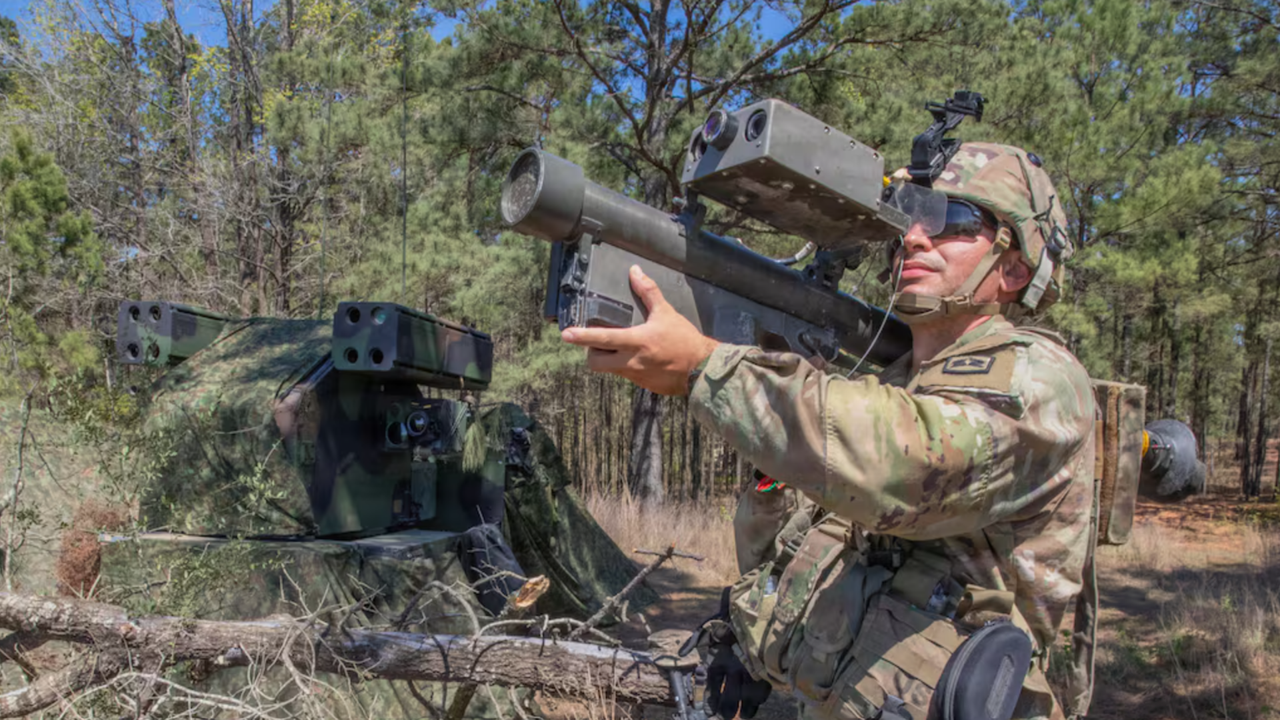
US Army is hunting for surface-to-air missiles able to take down small drones
Army seeks NGCM missile capable of defeating larger drone threats faster New missile programme builds on proven Coyote counter-drone launch infrastructure Army demands rapid launch capability with extended interception range against drones The US Army has launched a search for a new surface-to-air m
<![CDATA[ <article> <ul><li><strong>Army seeks NGCM missile capable of defeating larger drone threats faster</strong></li><li><strong>New missile programme builds on proven Coyote counter-drone launch infrastructure</strong></li><li><strong>Army demands rapid launch capability with extended interception range against drones</strong></li></ul><p>The US Army has launched a search for a new surface-to-air missile called the Next Generation C-sUAS Missile (NGCM), designed to destroy small drones while extending the range of existing counter-unmanned aircraft systems.</p><p>According to the Army's requirements, the missile should engage Group 2 drones like Boeing's ScanEagle,<strong> </strong>weighing between 21 and 55 pounds, flying below 3,500 feet at speeds under 250 knots.</p><p>It must also defeat larger Group 3 drones like<strong> </strong>Insitu's RQ-21 Blackjack, weighing less than 1,320 pounds, operating below 18,000 feet while remaining under 250 knots.<strong> </strong></p><h2 id="army-seeks-faster-missile-with-longer-reach">Army seeks faster missile with longer reach</h2><p>The Army expects the missile to leave its launcher within five seconds after the operator issues a firing command during an engagement.</p><p>Initial performance requirements call for intercepting <a href="https://www.techradar.com/cameras/drones/best-drone">drones</a> at 6 kilometers altitude beyond 16 kilometers, while future objectives extend engagement beyond 25 kilometers at 8 kilometers altitude.</p><p>Guidance should rely on a radar seeker, allowing the missile to operate alongside existing air defense networks supporting broader battlefield surveillance.</p><p>“The Army is looking for NGCM to be produced and integrated into the existing Coyote Launch System to provide extended range, rapid launch time, and reduced time-to-target over current effectors,” the notice said.</p><p>"The missile must be compatible with the Coyote Launcher with minimal to no modifications," it reemphasized.</p><p>The repeated references to the Coyote Launcher indicate that the Army wants the NGCM to integrate with its existing counter-drone infrastructure.</p><p>The requirement indicates the Army intends to build on its existing air defence architecture rather than introduce a new launch platform.</p><p>Compatibility is also required with Sentinel A3 and A4, LTAMDS, and TPQ-53 radar systems, allowing easier integration without extensive infrastructure changes.</p><p>Contractors have until August 20 to respond to the Army's Sources Sought notice outlining the proposed capability.</p><h2 id="cost-questions-remain-despite-procurement-ambitions">Cost questions remain despite procurement ambitions</h2><p>The Army plans both a fixed-site configuration using multiple sensors and a mobile version mounted on tactical vehicles capable of operating while stationary or moving.</p><p>Officials want the programme to reach Technology Readiness Level 7 through field prototype testing before the end of fiscal 2027.</p><p>The procurement schedule also requires contractors to supply 50 missiles for operational assessment by the beginning of 2028 before larger production decisions proceed.</p><p>Army planning documents indicate an ambition to acquire 5,000 missiles costing less than $150,000 each through bulk procurement arrangements.</p><p>This missile will be considerably cheaper than the Patriot interceptor, which costs roughly $4 million.</p><p>Though, it is still a far cry from the Iranian Shahed-136 drone costing an estimated $35,000 and can therefore be launched in swarms.</p><p>This comparison partly explains continuing investment in laser and microwave technologies, which promise significantly lower costs per engagement under suitable operating conditions.</p><p>However, missiles continue to operate in weather conditions that may reduce the effectiveness of laser systems. </p><p>Via <a href="https://www.defensenews.com/industry/techwatch/2026/08/04/us-army-wants-a-surface-to-air-missile-that-can-destroy-small-drones/" target="_blank" rel="nofollow">Defense News</a></p><figure class="van-image-figure inline-layout" data-bordeaux-image-check ><div class='image-full-width-wrapper'><div class='image-widthsetter' style="max-width:676px;"><p class="vanilla-image-block" style="padding-top:31.51%;"><img id="diM9tpwF2Lz85R8q85CT78" name="tr-g_news" alt="Google logo on a black background next to text reading 'Click to follow TechRadar'" src="https://cdn.mos.cms.futurecdn.net/diM9tpwF2Lz85R8q85CT78.jpg" mos="" align="middle" fullscreen="" width="676" height="213" attribution="" endorsement="" class="inline"></p></div></div></figure> </article> ]]>
Read the full article on TechRadar
Read Full Article →