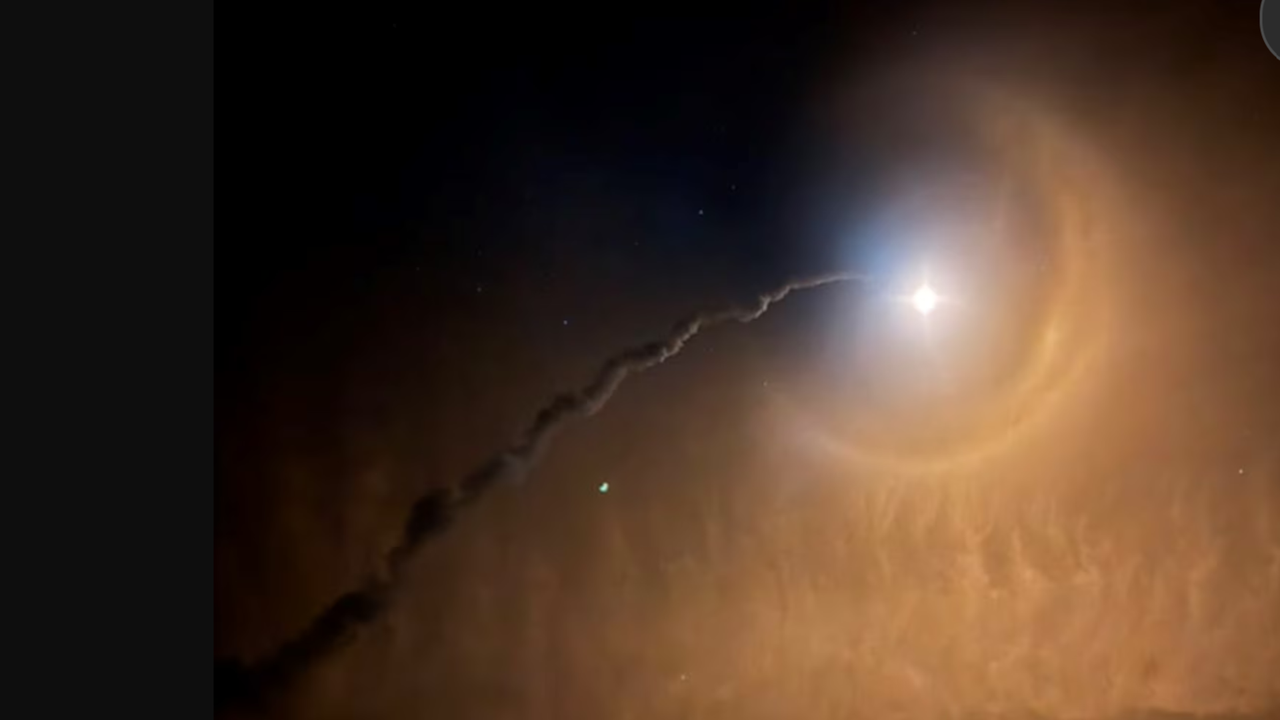
US Space Force and Japan launch new satellites to boost surveillance across the Pacific and further beyond
Japan has now launched the second U.S. surveillance payload under the program The payload will feed near-real-time orbital data to U.S. forces Mission Delta 2 will operate the American payload after deployment The United States Space Force and Japan have completed a bilateral satellite launch meant
<![CDATA[ <article> <ul><li><strong>Japan has now launched the second U.S. surveillance payload under the program</strong></li><li><strong>The payload will feed near-real-time orbital data to U.S. forces</strong></li><li><strong>Mission Delta 2 will operate the American payload after deployment</strong></li></ul><p>The United States Space Force and Japan have completed a bilateral satellite launch meant to strengthen surveillance capabilities across the Pacific region and beyond.</p><p>A US space domain awareness payload was carried aboard Japan's <a href="https://www.techradar.com/pro/japan-launches-sovereign-satellite-navigation-network-as-gps-cannot-reach-all-of-its-country">Quasi-Zenith Satellite 7</a>, launched from Tanegashima Space Center.</p><p>This mission marked the second and final launch under the Quasi-Zenith Satellite System-Hosted Payload program, described as the first bilateral U.S.-Japan cooperative effort built specifically around national security.</p><h2 id="a-wider-watch-over-the-indo-pacific">A wider watch over the Indo-Pacific</h2><p>The US payload will be operated by Combat Forces Command's Mission Delta 2, a unit that identifies and tracks objects across contested orbital terrain.</p><p>Mission Delta 2 is headquartered at Peterson Space Force Base in Colorado and maintains a presence at 11 separate operating locations worldwide.</p><p>Once fully operational, the payload is expected to deliver near real-time data to the Space Surveillance Network, expanding awareness of the geosynchronous orbit above the Indo-Pacific.</p><p>Both US payloads under the program were designed and built by MIT Lincoln Laboratory in Lexington, Massachusetts, while the Japanese host satellites came from Mitsubishi Electric Corporation in Kamakura.</p><p>The arrangement traces back to a December 2020 agreement between the two nations to jointly execute the hosted-payload program.</p><p>Officials describe the effort as evidence of a maturing alliance built around shared access to orbital infrastructure.</p><p>"The successful launch of QZS-7 is a powerful testament to the enduring strength and rapid modernization of the U.S.-Japan alliance," <a href="https://www.ssc.spaceforce.mil/Newsroom/Article-Display/Article/4574476/us-space-force-and-japan-successfully-launch-us-sovereign-space-domain-awarenes" target="_blank" rel="nofollow">said</a> Col. Bryon McClain, Space Force portfolio acquisition executive for Space Combat Power.</p><p>He added that merging capabilities in satellite communications helps maintain security in a contested space domain.</p><h2 id="a-project-years-in-the-making">A project years in the making </h2><p>According to the program’s officials, the launch was preceded by two years of integration work between U.S. and Japanese engineering teams.</p><p>"QZSS-HP is a key contributor to help us meet the threat of peer adversaries in space," said Col. Gina Peterson, deputy commander of Mission Delta 2 for Space Domain Awareness.</p><p>Brig. Gen. Brian Denaro, commander of U.S. Space Forces Pacific, called the U.S.-Japan alliance one of the country's greatest strategic advantages in the region.</p><p>He said the program shows how the two militaries can build interoperability from design through launch.</p><p>Neither government has disclosed the cost of the two-satellite program or a timeline for when the second payload will reach full operational status.</p><p>Space Force officials treat the launch primarily as an alliance milestone rather than a specific technical breakthrough.</p><p>That distinction matters because surveillance gains from a single hosted payload are likely to be incremental rather than transformative on their own.</p><p>The program's real test will be whether it produces usable, timely data that changes how the US and Japan respond to activity in geosynchronous orbit.</p><figure class="van-image-figure inline-layout" data-bordeaux-image-check ><div class='image-full-width-wrapper'><div class='image-widthsetter' style="max-width:676px;"><p class="vanilla-image-block" style="padding-top:31.51%;"><img id="diM9tpwF2Lz85R8q85CT78" name="tr-g_news" alt="Google logo on a black background next to text reading 'Click to follow TechRadar'" src="https://cdn.mos.cms.futurecdn.net/diM9tpwF2Lz85R8q85CT78.jpg" mos="" align="middle" fullscreen="" width="676" height="213" attribution="" endorsement="" class="inline"></p></div></div></figure> </article> ]]>
Read the full article on TechRadar
Read Full Article →