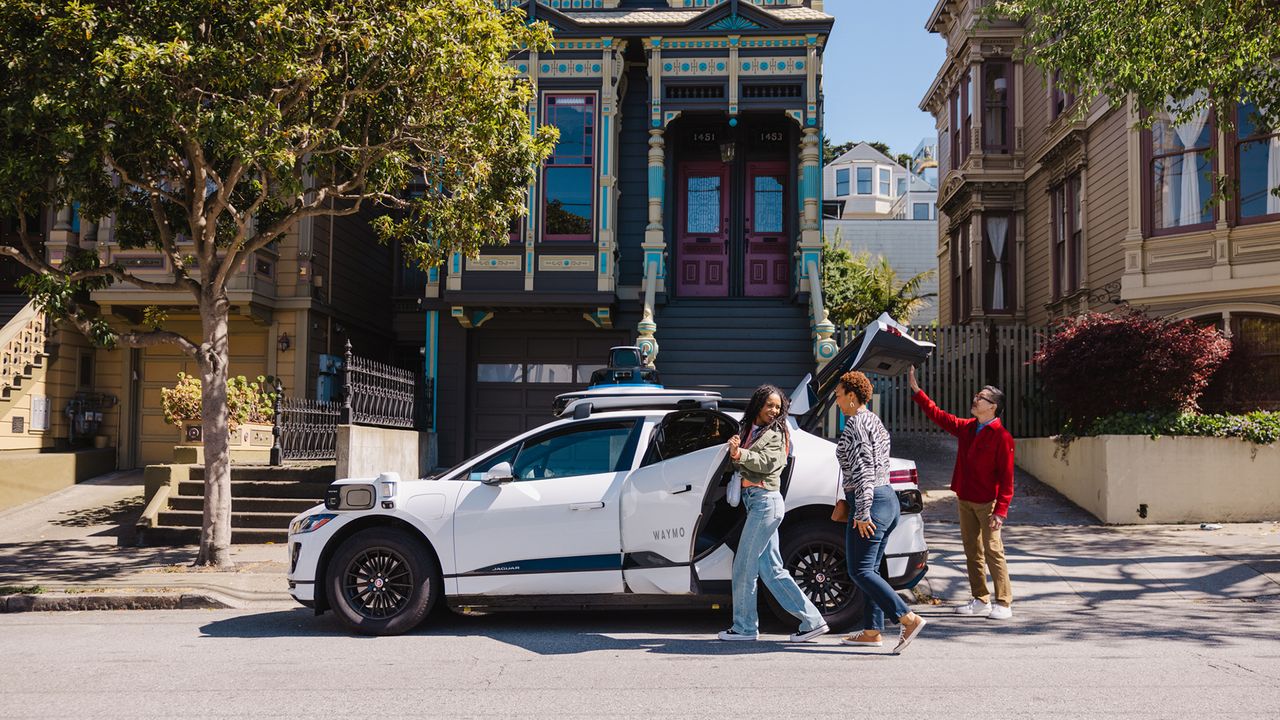
Waymo CEO says camera-only self-driving systems can’t support fully autonomous driving systems, and after testing multiple robotaxis, I have to agree
Camera-only systems can only “approximately match” a human driver Multi-sensing setup offers more than just a failsafe Waymo co-CEO backs the use of Lidar and radar over camera-only systems Waymo co-CEO Dmitri Dolgov has spoken out about the technology required to run a fully autonomous robotaxi ser
<![CDATA[ <article> <ul><li><strong>Camera-only systems can only “approximately match” a human driver </strong></li><li><strong>Multi-sensing setup offers more than just a failsafe</strong></li><li><strong>Waymo co-CEO backs the use of Lidar and radar over camera-only systems</strong></li></ul><p>Waymo co-CEO Dmitri Dolgov has spoken out about the technology required to run a fully <a href="https://www.techradar.com/tech/waymo-is-set-to-launch-its-london-pilot-this-month-heres-what-you-need-to-know">autonomous robotaxi service</a>, addressing the subject of camera-only systems.</p><p>While he didn’t mention Tesla directly in his in-depth talk at Y Combinator’s Startup School, the presentation directly addressed vision-only camera setups, like those Elon Musk and <a href="https://www.techradar.com/vehicle-tech/hybrid-electric-vehicles/elon-musk-says-tesla-is-almost-ready-to-allow-texting-when-behind-the-wheel-with-its-full-self-driving-system">Tesla</a> have been pursuing.</p><p>“Humans, of course, can drive with just eyes, so there’s that proof of existence,” he said, according to <a href="https://electrek.co/2026/08/04/waymo-co-ceo-camera-only-self-driving-tesla/">Electrek</a>.</p><p>“If the goal were to just approximately match human performance or to build an assist product, that’s a very reasonable way to go.”</p><p>But “weak sensing” inevitably leads to a safety curve that flattens out “way too early,” he added, highlighting the many cases where a camera system can come unstuck.</p><p>Low light or poor visibility, dust storms and objects physically blocking the lens can bring a camera-based system to a grinding halt in seconds.</p><p>Dolgov then gave an example of how Waymo’s combination of Lidar, radar and high-definition cameras allowed one stricken vehicle to safely navigate itself back to a depot when a tree branch became caught in its wipers and obscured the camera lens.</p><div class="youtube-video" data-nosnippet ><div class="video-aspect-box"><iframe data-lazy-priority="high" data-lazy-src="https://www.youtube-nocookie.com/embed/Gp4zrV3-6N8" allowfullscreen></iframe></div></div><p>While Dolgov doesn’t completely dismiss camera-based systems, stating that they can easily support a driver with highly autonomous assistance systems, he admits they will struggle to replace a human entirely.</p><p>The issue is that fully autonomous robotaxis need to be as close to perfect as it’s possible to be.</p><p>A mounting record of accidents will likely put off customers for life and kill the technology before it has time to gain a foothold.</p><h2 id="many-take-the-multi-modal-path">Many take the multi-modal path</h2><figure class="van-image-figure inline-layout" data-bordeaux-image-check ><div class='image-full-width-wrapper'><div class='image-widthsetter' style="max-width:1920px;"><p class="vanilla-image-block" style="padding-top:56.25%;"><img id="r9ZFznzJn4tHGNnSGiZWFW" name="Hyundai Motional Robotaxi Las Vegas" alt="Hyundai Motional Robotaxi Las Vegas" src="https://cdn.mos.cms.futurecdn.net/r9ZFznzJn4tHGNnSGiZWFW.jpg" mos="" align="middle" fullscreen="" width="1920" height="1080" attribution="" endorsement="" class="inline"></p></div></div><figcaption itemprop="caption description" class=" inline-layout"><span class="credit" itemprop="copyrightHolder">(Image credit: Hyundai/Motional)</span></figcaption></figure><p>Having ridden in numerous <a href="https://www.techradar.com/vehicle-tech/hybrid-electric-vehicles/ive-tried-nissans-latest-advanced-driverless-technology-and-it-handles-60mph-on-rural-roads-better-than-most-humans">autonomous vehicles</a> over the years and listened to those that have built them, I am fully in Dmitri Dolgov's camp.</p><p>While a camera-based system might help keep costs down, fitting autonomous vehicles with Lidar, radar, and other sensors feels like a natural and reasonable step to make them as safe as possible.</p><p>A visit to <a href="https://www.techradar.com/vehicle-tech/hybrid-electric-vehicles/i-took-a-ride-in-hyundais-fully-autonomous-robotaxi-and-its-surprisingly-good-at-navigating-the-wild-streets-of-las-vegas">Motional’s HQ in Las Vegas</a> earlier this year illustrated the need for multiple sensing technologies when you completely remove the driver from the picture.</p><p>Its robotaxis, which are now bespoke versions of the Hyundai Ioniq 5 (complete with radar and Lidar), have driven over two million autonomous miles with zero at-fault incidents.</p><p>Like Waymo, it too believes a multimodal approach that fuses various technologies is the safest way forward.</p><p>Laura Major, the company’s CEO, said at the time that rival startups were able to get to a “90% performance” very quickly, often relying solely on high-definition cameras.</p><p>“These offer really smooth rides in most situations,” Major remarked. “The problem is when you’re going to remove a driver and have true driverless operation, that’s not enough. You can’t perform well in 90% of the cases,” she added.</p><p>Admittedly, I haven't ridden in one of Tesla's driverless Robotaxis, but the numbers don't lie. </p><p>According to Electrek, Tesla's own data confirms a crash rate <a href="https://electrek.co/2026/01/29/teslas-own-robotaxi-data-confirms-crash-rate-3x-worse-than-humans-even-with-monitor/" target="_blank">three times worse</a> than humans even with a monitor at the wheel, while Waymo's numbers suggest it is 17 times safer after covering some 220 million rider-only miles.</p><p>Tesla has accumulated just 380,000 driverless miles over the past year since launching its robotaxi service. </p> </article> ]]>
Read the full article on TechRadar
Read Full Article →